
You ID Me Blog
News & Information From the Team
News & Information From the Team
|
Prime Minister Rishi Sunak is planning to talk about changing some rules about work and health. He wants to change who decides if someone is too sick to work, from doctors to other health experts.
Right now, many people in the UK are not working because they are sick. The Labour Party, another group in the government, thinks that the Prime Minister's team isn't coming up with new ideas and isn't doing enough to help people stay healthy and find jobs. The Prime Minister will say in his speech that we should look at what sick people can do at work, not just what they can't do. He thinks we shouldn't make a big deal out of everyday problems and say they are medical issues. He also plans to ask doctors, workers, and people who have been sick what they think about the current rules and how these can be improved. Many people haven't been able to work because they are long-term sick, especially with problems related to how they feel, like being very sad or stressed. Last year, doctors said that many people were not fit for work, and sometimes they kept saying it without giving extra advice. A professor from the Royal College of GPs, a group for doctors, said doctors often talk to their patients and give advice about being sick, but they are open to letting other experts handle it. This all comes after a government person, Mel Stride, said sometimes normal life problems are wrongly labeled as medical conditions, which stops people from working. He believes having a job can help people feel better. Other politicians from different parties say the Prime Minister needs to do more to fix health services so people can get better and work instead of making small changes that don’t help much. They want to make sure everyone can see a doctor when they need to and get better health care. Speak4me In Case of Emergency by You ID Me: A Game-Changer for SafetyIn today's fast-paced world, emergencies can strike at any moment, catching us off guard and leaving us vulnerable. Whether it's a sudden health crisis, a car accident, or any other unforeseen event, having immediate access to vital information can make all the difference. That's where Speak4me by You ID Me steps in, revolutionizing how we handle emergencies and ensuring our well-being is prioritized.
Speak4me, a feature offered by You ID Me, is a cutting-edge solution designed to assist individuals during emergencies when they may be unable to communicate effectively. This innovative tool empowers users by providing crucial information to first responders and medical professionals, ensuring prompt and accurate assistance when it matters most. One of the standout features of Speak4me is its simplicity and ease of use. By simply activating the feature on their You ID Me profile, users can input essential details such as medical conditions, allergies, medications, and emergency contacts. This information is securely stored and can be accessed by first responders in the event of an emergency. But what sets Speak4me apart is its ability to speak for the user when they may be unable to do so themselves. By activating the feature, users grant permission for their critical information to be accessed and communicated verbally through the You ID Me platform. This verbal transmission can be invaluable in situations where the user is unconscious, disoriented, or unable to communicate effectively. The process of activating Speak4me is straightforward, as outlined on the You ID Me website. Users simply need to follow a few simple steps to ensure their profile is set up correctly and the feature is ready for use. From there, they can have peace of mind knowing that their important information is readily available in case of an emergency. Speak4me is not just a tool for individuals—it's a game-changer for families, caregivers, and healthcare professionals alike. By leveraging technology to streamline emergency communication, Speak4me reduces the risk of misunderstandings, delays in treatment, and potentially life-threatening situations. Imagine a scenario where a person with a severe allergy experiences an anaphylactic reaction while alone. With Speak4me activated on their You ID Me profile, emergency responders - once they arrive and access the patient's emergency ID profile - can quickly access information about their condition, including specific allergies and emergency contacts. This rapid access to critical data could potentially mean the difference between life and death. Speak4me by You ID Me is a game-changer for safety, providing individuals with a lifeline during emergencies when they need it most. By harnessing the power of technology and innovation, Speak4me empowers users to take even more control of their health and well-being.
We recently sent out comms about the incredible new Speak4me feature for You ID Me. Learn more about the super effective feature that can enhance the overall safety of your emergency medical ID profile...
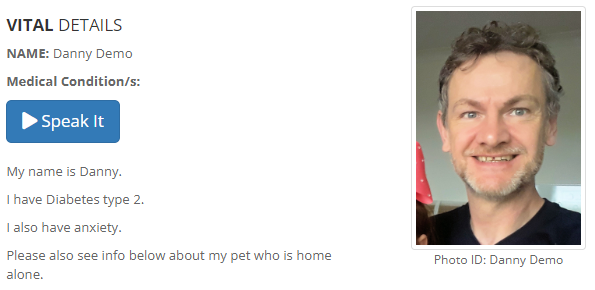
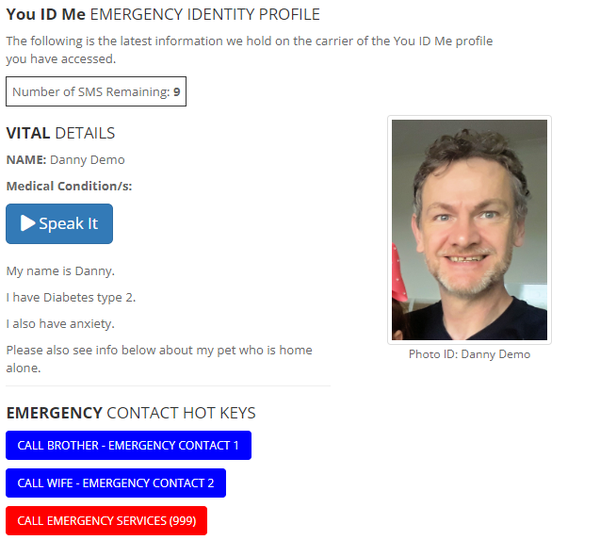
 We're excited to announce that You ID Me will soon be able to speak your emergency information out loud if you have an emergency or incident and your profile is accessed. Using our powerful new AI speech tool paramedics and first responders will have the option to listen to your key information read out loud to them. Having vital medical info read out to them could free first responders up and save vital time in an emergency. They'll continue to see the text version of your information. Below: Enter our 'Suggest a name' contest, Listen to example audio, FAQ and contest terms & conditions. 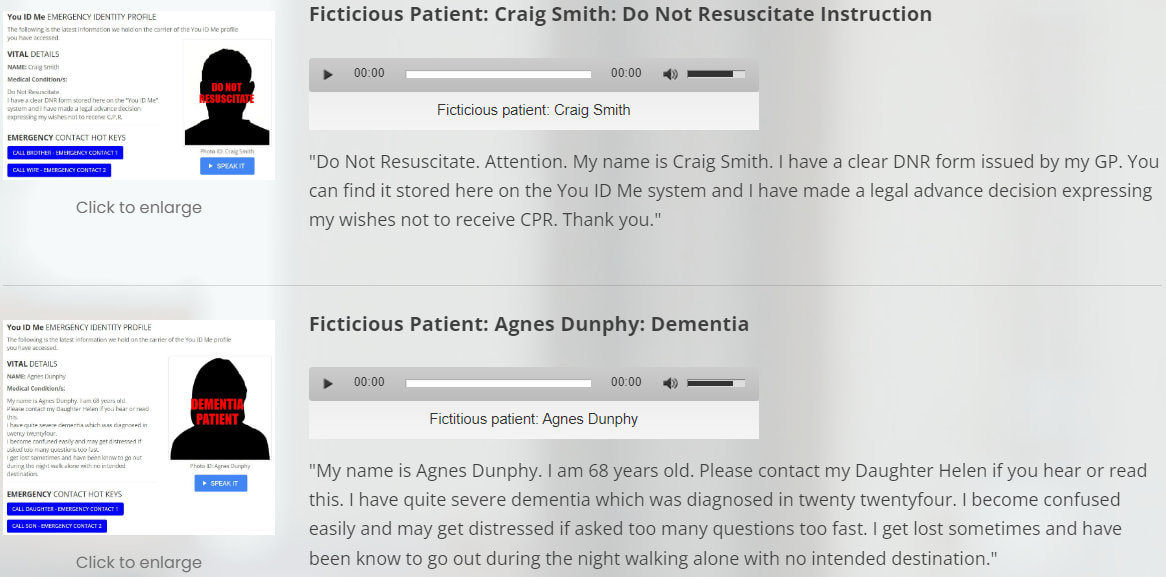 Talking medical ID for any medical condition. 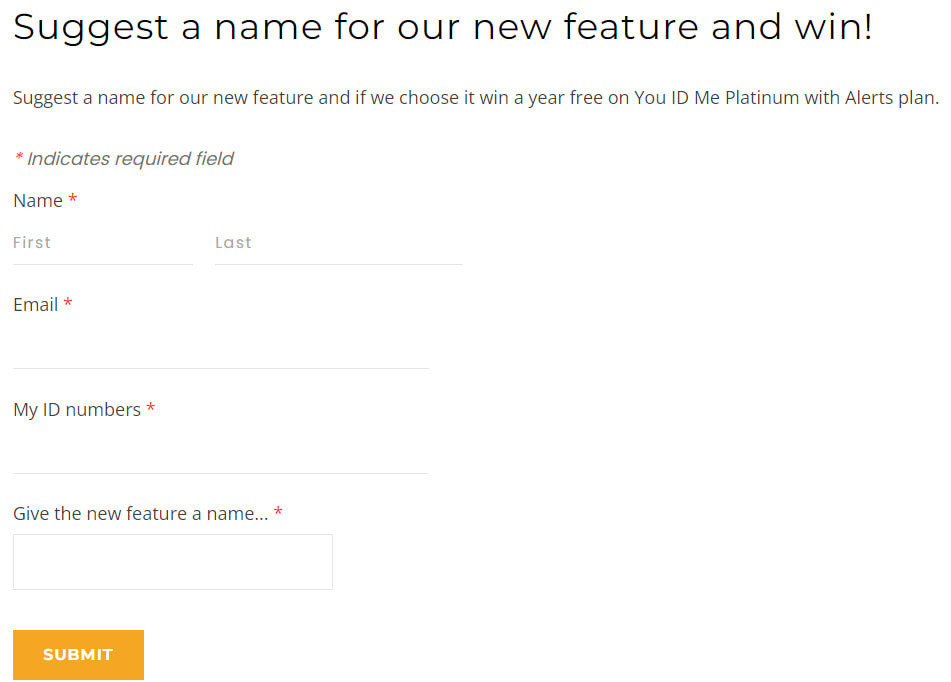 In today's unpredictable world, the safety of your team members is of paramount importance. Recognising the need for a robust emergency response system, we introduce EmployeeSafe – a revolutionary solution that integrates employee ID badges with a built-in emergency ID and alerts system. The Challenge: Navigating Uncertainty In the ever-changing landscape of the modern workplace, the possibility of emergencies or dangers affecting your team members is a harsh reality. EmployeeSafe is designed to address this concern by offering a simple yet powerful system to safeguard your employees and keep you informed during critical situations How Does EmployeeSafe Work?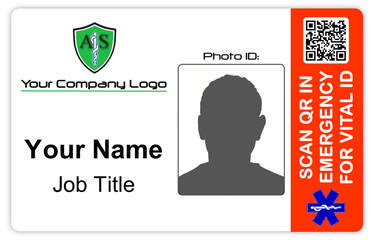 EmployeeSafe utilises the innovative "You ID Me" system, transforming ordinary employee ID badges into a comprehensive emergency response tool. Priced affordably at just £9.95 per employee per year, this system ensures the safety of your workforce by providing a discreet method for them to signal distress Fast Identification: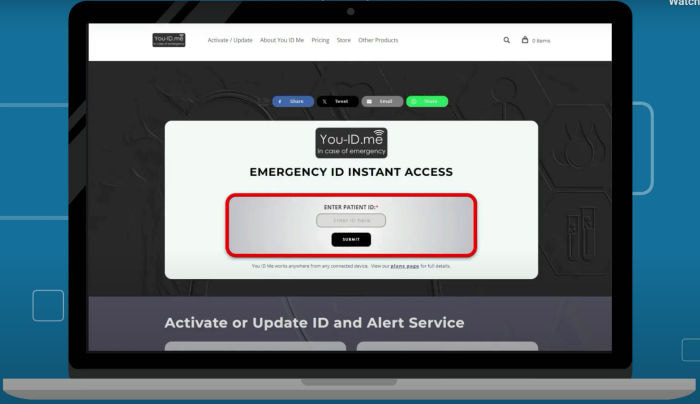 1. Quickly transmits vital ID, emergency contact, and medical information to any first responder's phone. 2. Instant Alerts: Triggers immediate alerts to registered managers and emergency contacts, notifying them of the employee's difficulty. 3. Better Communications: Facilitates seamless communication by sharing first responder contact details, offering a single point of contact for the office manager or emergency contacts. 4. Map of Employee's Location: Allows employees to send distress alerts to their office manager and contacts, accompanied by a Google map showing their precise location in case of danger. Getting Started with EmployeeSafeImplementing EmployeeSafe is a straightforward process, making it suitable for both office-based and fieldwork scenarios. Each employee wears or carries an ID badge featuring your business logo, their name, job title, and a concise instruction for first responders. Additionally, a unique ID number or QR code is included. Packed with Features1. **ID Badge Features:**
- Business logo, employee name, job title, and concise instruction for first responders. - Unique ID number or QR code for quick access to emergency information. 2. **Emergency Profile Pages:** - First responders can enter the ID number or scan the QR code using their phone to access vital employee information stored on the "You ID Me" portal. 3. **Easy Activation:** - Employees activate their unique ID on the You ID Me website and register essential information, including ID, emergency contacts, and medical details. 4. **Customisable Alerts:** - Simple selection process for choosing emergency contacts to receive alerts during critical situations. EmployeeSafe ensures that your team members are equipped with a powerful tool to navigate emergencies, providing peace of mind for both employees and employers. In a world where uncertainties abound, EmployeeSafe stands as a reliable guardian for your workforce. To inquire about implementing this cutting-edge solution, fill out the short form at the bottom of this page today! So we're in the office on New Year's Eve getting a large order ready for one of our customers when the announcement came over the radio that Australia have just celebrated the opening of the new year.
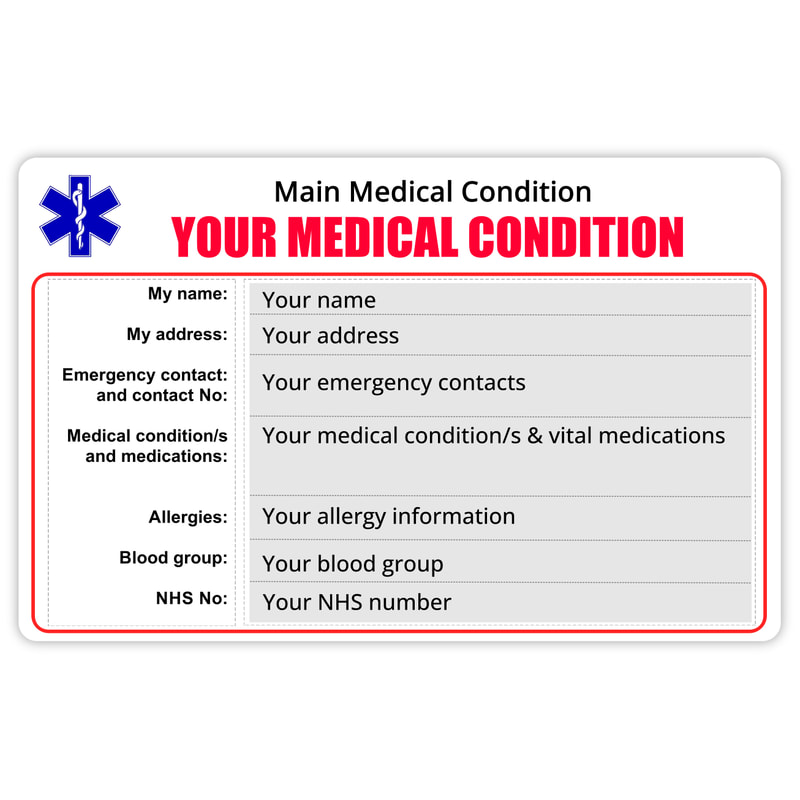
Wow! The hours are cantering away with us! So we'd just like to wish all our customers old and new a very Happy New Year 2024. We wish for you health and happiness, peace and stability throughout the coming year and beyond. Thank you once again for choosing You ID Me for your emergency ID and alert needs. Have a great New Years Eve and stay safe. There's been a lot of change to You ID Me over the kast 12 months with the introduction of a new dashboard for customers with lots more functionality. Walkalone safety tool has been rolled out and we're now looking at development for 2024. Safety and security has been stepped up with one time passcodes being made mandatory alongside many other security features. The website has been refreshed and this work continues into 2024. One thing we'd really like to include in the coming year is the ability for alerts to be sent by WhatsApp. Our dev team are looking into this and we'll report back at some point soon. Keep your eye on your mailbox for updates throughout 2024. Take care and all the best. Lee and the team. 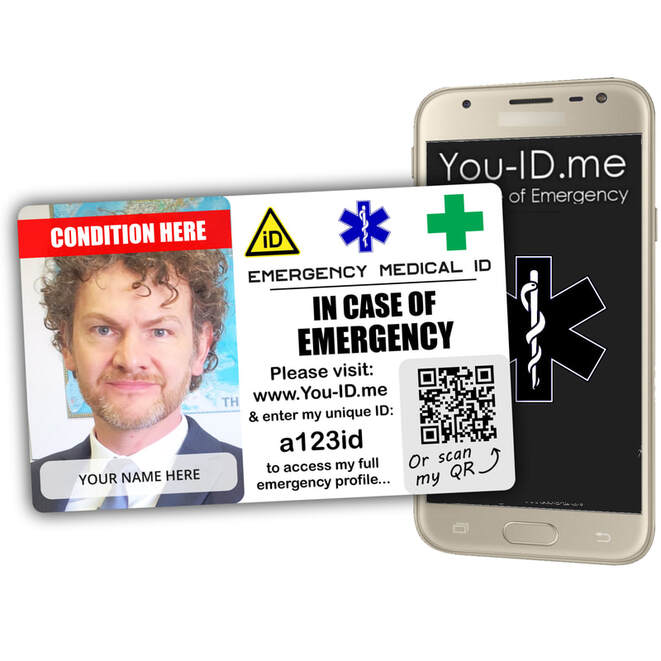 Our new card design launched this week features all the vital elements needed in case of emergency:
 Just a quickie,,, we're on TikTok. So if you use the app and would like to see some of our latest short videos head on over and search you.id.me Have fun. 🙂   Share or tag us @youidme and get a free Bunny the Sheep sticker from You ID Me True story. Bunny the Sheep was inspired by a call from a farmer who asked if You ID Me could help with sheep that ocassionally go missing. We think he'd been searching for sol-ewe-tions online and had inadvertantly found You ID Me.
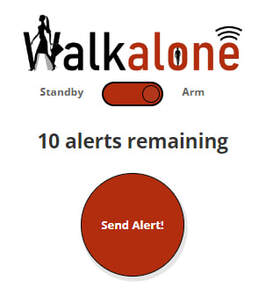
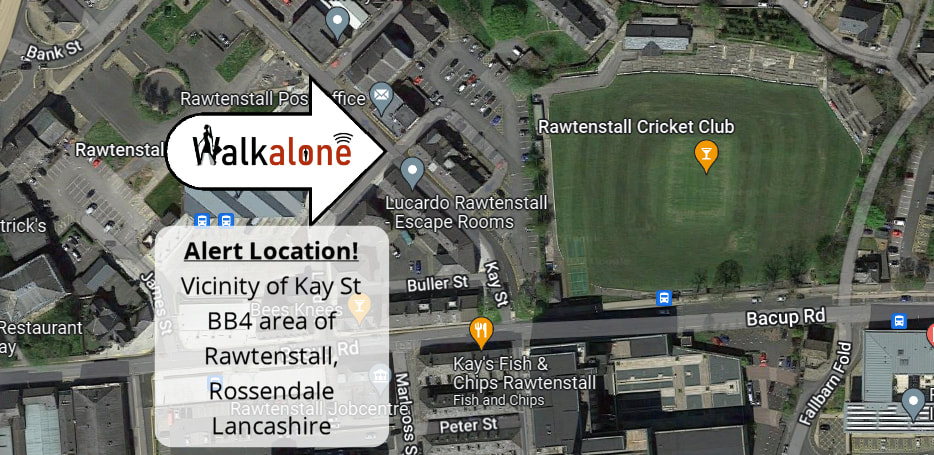
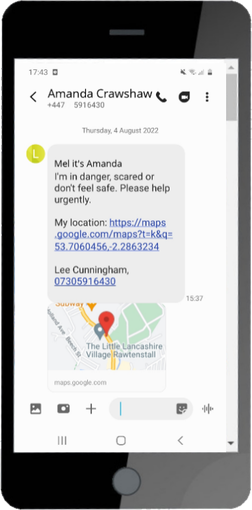
So we've turned the chuckle into I suppose a little mascot that we hope will become popular as a light-hearted bit of fun. Stick it on your fridge, care, case or anywhere else you care. Get your's free more here. ^lc  Walkalone lets your contacts know you're in danger, you're scared or you don't feel safe and it provides your location. Walkalone is a unique personal safety service provided by You ID Me Platinum. Walkalone puts a simple yet powerful emergency alert button in the centre of your phone screen to use if ever you're in danger, scared or need urgent help. The button triggers alerts to your registered emergency contacts and shows them your location using Google Maps. Walkalone can be used by anyone that carries a phone. It's designed in case they:
Who is Walkalone for?The Walkalone personal safety tool is for anyone that carries a mobile phone; women and girls, men and boys, of any age. The original idea for Walkalone was for the creation of a tool to help keep lone females safe. It was triggered by the horrific abduction and murder case of Sarah Everard in March 2021 by off duty Met Police Officer Wayne Couzins - interest and use of Walkalone is divided across gender and all ages, highlighting the need for a personal safety alert tool. How does Walkalone work?
Is Walkalone accurate?
Does Walkalone work everywhere?Testing has been carried out across the UK. Due to SMS restrictions in other parts of the world it's strongly advised to that users check first to see if your / your emergency contacts' mobile phones have been registered in any country outside of the UK. It's imperative that users test the Walkalone tool as soon as it is made live on your profile to satisfy yourself that the service works with your mobile network and the mobile network of your emergency contacts. What is the cost of Walkalone?Walkalone is included with non-duiscounted Platinum Plan memberships when paid by monthly or annual direct debit.
Until December 2022, existing Platinum Plan members can add Walkalone to their plan at the discounted price of £23.88/year. Start here to get Walkalone. Example: How this saves money for existing members? If a member has taken up a discounted Platinum Plan at £12/year later adds Walkalone to their plan for £23.88.00 they still save £24 on the full price of Platinum Plan. |
About usWe're a small team working hard to ensure that carrying ID is secure, easy and affordable for our customers. Archives
April 2024
Categories
All
|
|
YOU ID ME PLAN OPTIONS
Compare You ID Me plans Free annual emergency ID product INTERACT WITH US Help centre You ID Me blog - news and views Refer a friend scheme Testimonials page Our purpose |
MORE ON YOU ID ME
EmployeeSafe: Emergency ID for teams Walkalone personal safety tool Life Assurance through You ID Me You ID Me store page You ID Me service page LEGAL DOCUMENTS You ID Me terms and conditions Walkalone terms and conditions Privacy policy Cookie policy Legal notice FOR 3RD PARTIES White labelling Trade Enquiries Partner with us Just Diagnosed Health & Life Care Support |

SIGN UP FOR OUR SPECIAL OFFERSSafe unsubscribe - never share guarantee
|
 RSS Feed